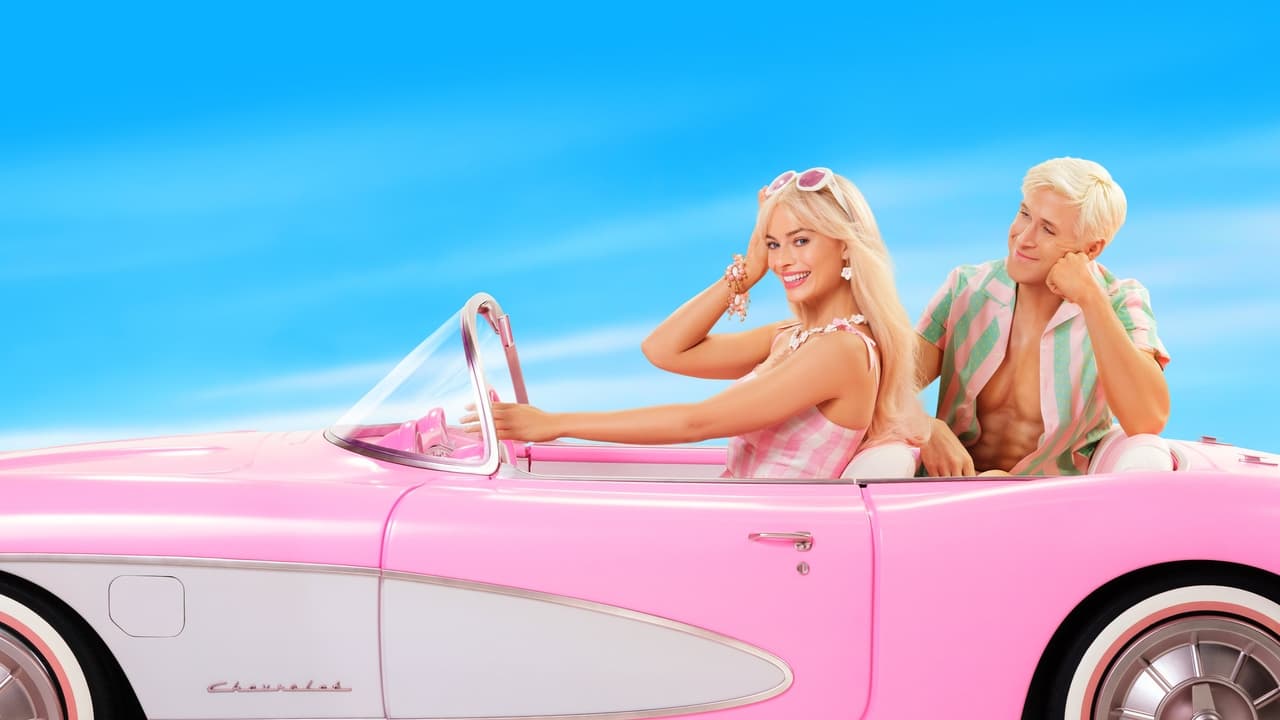
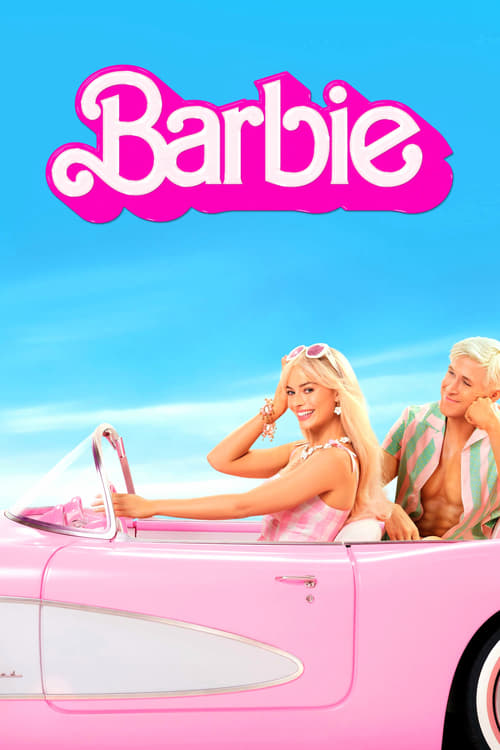
Barbie
2023
⏱️ 114 min
📅 Released
🌐 EN
ComedyAdventure
Barbie and Ken are having the time of their lives in the colorful and seemingly perfect world of Barbie Land. However, when they get a chance to go to the real world, they soon discover the joys and perils of living among humans.
Where to Watch (US)
Stream
 HBO Max
 HBO Max Amazon Channel
 YouTube TV
 Cinemax Amazon Channel
 Cinemax Apple TV Channel
Rent
 Amazon Video
 Apple TV
 Google Play Movies
 YouTube
 Fandango At Home
 Spectrum On Demand
 Plex
Plex
Buy
Amazon Video
Apple TV
Google Play Movies
YouTube
Fandango At Home




User Reviews
September 3, 2024
#MovieReview #BarbieMovie #TheBarbieMovie #Barbie
In my opinion, this movie was well-executed, striking a balance between fantasy and reality. "Barbie" takes viewers on an exhilarating journey, bringing the beloved doll and cartoon character to life in a spectacular live-action adaptation.
Margot Robbie shines in her role as Barbie, delivering a fantastic performance alongside a talented cast. While there were a few questionable choices in terms of casting, such as introducing a transgender Barbie character, it did not detract from the overall appeal of the film. While it may have caused some confusion among viewers, the movie's charm remained intact.
America Ferrera delivers a powerful and empowering monologue in the film, showcasing her incredible talent and versatility as an actress. Her transition from "Ugly Betty" to this role is commendable, and she truly stands out in the movie.
"Barbie" is a fun and quirky film that may not be suitable for very young children or those who prefer to shield their kids from certain themes in movies. It offers an over-the-top experience that may not be everyone's cup of tea.
The movie's main villain may not be a surprise, but the handling of the character is well-executed. Although some may find Ryan Gosling a bit too mature to play Ken, his performance adds an interesting twist to the film.
January 17, 2024
[Blu-ray HD Movies Store](https://www.bluray-discs.com)
My feelings were somewhat ambivalent before watching "Barbie". Due to my admiration for Greta Gerwig's films and her personal work, I had high expectations. However, the comprehensive marketing of "Barbie" had me concerned that it might fall into the trap of consumerist pseudo-feminism and face backlash from the public.
But I must say, this film truly exceeded my expectations!
Perhaps many people watched "Barbie" for the nostalgia of their childhood, but this movie is not about creating a pure and nostalgic atmosphere like "Toy Story". It is a profound and highly modern film with a thought-provoking core, marking a breakthrough for Hollywood in commercial films with feminist themes. Its narrative remains closely linked to various issues in modern society. While it includes the passionate declarations and satirical commentary on patriarchy often seen in feminist films, it also sincerely attempts to build bridges for dialogue between genders and among the same gender.
This is particularly evident in its depiction of "patriarchy" and the "male gaze."
**What is patriarchy?**
The answer presented by the film is that patriarchy does not necessarily refer to a society solely ruled by men. The essence of patriarchy lies in the imbalance of power structures, thus any society where one party dominates or suppresses the discourse of another is an embodiment of patriarchy. The film conveys this through the contrasting portrayal of Barbieland, which represents a matriarchal society, and Kendom, which represents a patriarchal society, as well as the power struggles between the two and their resulting consequences. In Barbieland, the Barbies have absolute dominance in social, political, economic, and cultural aspects. The night festivities always belong to the Barbies, while Kens merely serve as props. On the other hand, Ken, after experiencing the baptism of the real world (the true patriarchy society), immediately becomes more patriarchal and transforms Barbieland into Kendom, adopting the patriarchal system of the real world. The power dynamics are thus reversed, and the Barbies become mere servants to the Kens. However, whether it is Ken in Barbieland or Barbie in Kendom, both are unable to express themselves freely. They both inevitably become objectified beings, seeking their own worth through the validation of others. This is because the web of power restricts subjectivity and is independent of gender. Anyone, regardless of gender, can be the perpetrator of patriarchy, and anyone, regardless of gender, can be a victim of patriarchy. This exploration sets the film apart from many mainstream movies that fail to delve into the complexities of patriarchy.
That being said, the climactic scene where the Barbies reclaim political power seems to suggest that female governance is stronger than solely male governance, but with the need for certain modifications. However, upon watching it only once, I am not entirely certain about this point.
**Reproduction of the Four Gazes of Gender**
It can be said that the film industry has always been built upon the male gaze, while the female gaze has gradually become familiar with the progress of society and the increasing influence of women in consumer culture. However, the male gaze often found in films is directed towards sexualized female characters, especially evident in the visual language. Similarly, the female gaze is based on the objectification of male characters from the perspective of female viewers. In contrast, the discussion of male gaze towards other males or female gaze towards other females, and the impacts they generate, are rarely brought up in public discourse.
These four dimensions of gender gaze are represented to varying degrees in the film "Barbie". In Barbieland, the Kens are the objects of gaze and are in a passive position both physically and mentally. After experiencing the privileges brought by patriarchy for males in the real world, Ken projects his inner desires and fantasies onto successful male figures in reality, ultimately achieving self-identification with these masculine qualities by establishing Kendom. The Barbies in Kendom, including Barbie herself portrayed by Robbie, and the peculiar gaze directed towards them when they enter the real world, represent the reproduction of the male gaze. The Barbies in Barbieland may appear carefree and glamorous, but they still hold certain underlying consensus regarding "beauty". That is why Barbie becomes so alarmed when she discovers that her feet are no longer in the shape of high heels but can fully touch the ground, or when her skin develops cellulitis instead of remaining smooth. This also explains why the unconventional and eccentric Barbie advocating female liberation and freedom is initially excluded from the mainstream in Barbieland, only to be eventually accepted at the end.
**Non-stereotypical Feminism in Barbie**
The third highlight of this film lies in its unconventional expression of feminism, primarily manifested through the construction and subsequent shattering of Barbieland, which breaks away from the clichés of commercial films representing female themes, such as those centered around young girls.
Postfeminism emerged in the 1980s as a critique and reflection on the waves of the second-wave feminist movement. It is not a singular school of thought, but rather encompasses a broad concept containing various voices. According to feminist scholar Angela McRobbie, postfeminism overly emphasizes individual choices, which hinders the understanding of gender's structural role and impact, thereby weakening the force of social change. Furthermore, in the context of the "sheconomy," postfeminism's endorsement of consumerism also poses the danger of reducing feminism to a commodity or marketing strategy. This, in turn, obstructs people from acknowledging the real challenges faced by women in economic, political, and social spheres. From this perspective, the film's portrayal of Barbieland and the lifestyles and states of the Barbies in the early stages carries a strong sense of postfeminism.
Surprisingly, the film ingeniously transitions to Barbie crossing over into the real world and embarking on a series of explorations regarding gender, emotions, life, and death. This breaks the singular fantasy that Barbie and female viewers may have about Barbieland, preventing the story from becoming a mindless action flick. The film not only advocates for body diversity and inclusivity in women but also delves deeply into Barbie's journey of personal growth, showcasing how she transforms from an innocent and simple assembly line doll into a fully realized human being with genuine emotions and a strong sense of self-will. In this regard, "Barbie" truly reconstructs the meaning of Barbie, imbuing its feminism with a more enriching and sincere undertone.
**Intriguing Plot and Character Designs**
Proactively deconstructing oneself
Two particularly memorable scenes stand out in this regard. First, Margot Robbie's Barbie, in a self-deprecating manner, criticizes her own appearance while others hurriedly try to console her. Suddenly, a voice-over interjects, implying that even the director chose Margot Robbie to play the role of Barbie, making the self-critique less convincing (laughs). The second scene involves the CEO of the Barbie manufacturer rejecting the film's mom character's passionate plea for aesthetic diversity in Barbie's production. However, as soon as his subordinate suggests that this approach could be highly profitable, he immediately changes his stance, simultaneously mocking capitalism and poking fun at himself.
Filming war scenes
This film is packed with entertaining plot twists and visuals, one of which includes a chaotic gathering of Ken soldiers amidst Kendom's disarray. Greta transforms the typical war scene, filled with sword fights and rivers of blood, into a lively and adorable virtual pet brawl, showcasing her unique and imaginative approach.
Allan's character design
The design of the character Allan is also quite intriguing. In a Barbieland where all males are named Ken and all females are named Barbie, where gender traits and boundaries are distinct, Allan stands out as a one-of-a-kind existence, defying any specific gender definition, be it in name, personality, or appearance. This adds a touch of queerness to the film.
Homage to various works
"Barbie" pays homage to several classic films, showcasing their imaginative style. Examples include the opening sequence reminiscent of "2001: A Space Odyssey," the choice between two pills reminiscent of "The Matrix," and the dance choreography of the Ken characters during the civil war, which nods to "Singing in the Rain" (Greta has expressed her love for this film in multiple interviews, showing genuine appreciation!).
"I want to see a gynecologist"
Initially, the significance of this final line may be unclear, but thanks to explanations from online users, it becomes apparent. Barbie, originally a doll devoid of human reproductive organs, mentioning a gynecologist implies that she now has a vagina. The desire to visit a gynecologist can be seen as her way of exploring and understanding herself as a human being.
When it comes to flaws in this film, one could argue that the pacing of the narrative is too fast, at times feeling abrupt, such as in the resolution of the mother-daughter conflict. However, one could also argue that this is a deliberate choice driven by its commercial nature, and in a way, it aligns with the film's whimsical and imaginative style.
One scene in particular deeply touched me, and that is the ending where Barbie's creator, Ruth Handler, and Barbie herself transcend the barriers of time and space to come face to face once again. The elderly Handler gazes tenderly at the doll she once single-handedly brought to life, encouraging her to bravely explore the possibilities of life and accompany her through the final stage of her awakening. In this seemingly frozen moment, the love they share flows gently in the soft whispers of Billie Eilish.
In the end, both Ken and Barbie find their own purpose and value, and through their individual journeys of growth, the film constructs a vision of an ideal world:
In this world,
everyone has the right and courage to be themselves.
In this world,
It’s not Barbie and Ken,
It’s not Ken and Barbie,
It’s Barbie and it’s Ken。
January 7, 2024
'Barbie' has more to it than I would've predicted. It's a good movie.
I steer clear of as much film promo as possible, so was kinda expecting this to be more of a 'proper' comedy - just an assumption on my part. It does have humour but it's far from the film's main thing, there are a few chucklesome moments but I found it to be more earnest than funny.
It does get a tiny bit moralistic, though undoubtedly has the right intentions and does certainly hit the nail on the head with certain points. The story itself is interesting, I like that they didn't lean deep into the usual fish out of water stuff when Barbie visits the real world. I enjoy how the world is set, with the multiple Barbies and Kens etc.
The cast are great. Margot Robbie is top notch - the perfect choice. Ryan Gosling is excellent as well, while America Ferrera, Will Ferrell and Michael Cera are positives too. Away from those onscreen, the look of the film is splendid and the soundtrack fits well - even if Charli XCX's track is the only one I'd intentionally listen to.
All in all, glad I watched this. I'd recommend it, even if my mum (who I watched this with, fwiw) wouldn't. 😄
Crew
Director
Greta Gerwig
Writer
Noah Baumbach, Greta Gerwig
Producer
Michael Sharp, Ynon Kreiz, Josey McNamara
Production
LuckyChap Entertainment, Heyday Films, NB/GG Pictures, Mattel, Warner Bros. Pictures
Keywords
feminismsatirepatriarchysocial satirebased on toyfemale protagonistfish out of waterwomanhooddollfantasy world