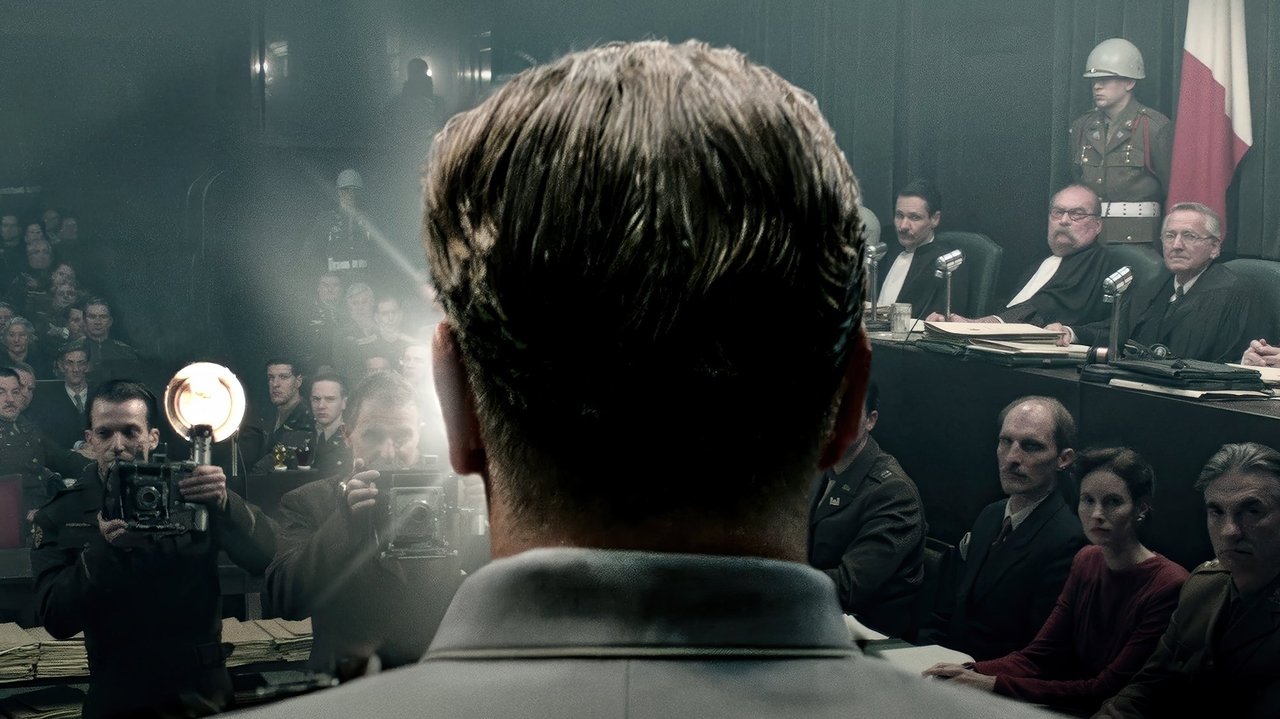
Nuremberg
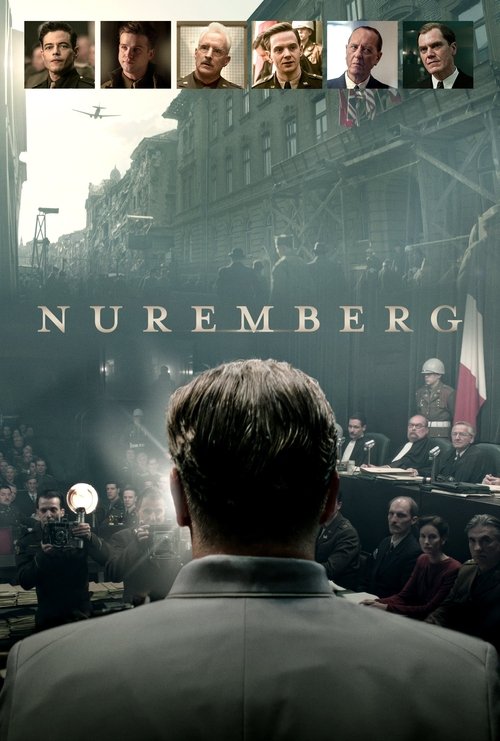
2025
⏱️ 148 min
📅 Released
🌐 EN
HistoryDrama
In postwar Germany, an American psychiatrist must determine whether Nazi prisoners are fit to go on trial for war crimes, and finds himself in a complex battle of intellect and ethics with Hermann Göring, Hitler's right-hand man.





User Reviews
December 17, 2025
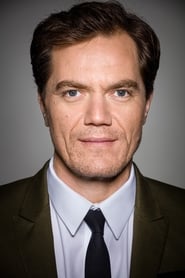
Itʼs widely maintained that those who don’t learn from history are destined to repeat it (despite the fact, unfortunately, that we also all too often disregard such sage advice). But, if there’s any message to be taken away from this latest offering from writer-director James Vanderbilt, this would be it, especially given the prevailing sociopolitical climate. This engaging historical drama/psychological thriller serves up a potent cautionary tale about the need to recognize, embrace and take seriously the lessons to come out of the Nuremberg trials in which former Nazis were prosecuted for crimes against humanity in the wake of World War II, the first time proceedings of this kind were ever conducted (however, viewers should note that this is not a remake of the 1961 iconic movie classic “Judgment at Nuremberg”). Specifically, the film follows the efforts of US Supreme Court Justice Robert Jackson (Michael Shannon) to convene an international tribunal for this purpose, one consisting of judicial representatives from the Allied Forces of the US, the UK, France and the USSR. In the first of what would become a series of 12 trials, the tribunal prosecutes 22 Nazi defendants, including Reichsmarschall Hermann Göring (Russell Crowe), second in command to deceased Führer Adolf Hitler. Göring’s capture at the end of the war represents a major coup for the Allies in their quest to secure justice, but, to assure his competency to stand trial, the US military assigns psychiatrist Dr. Douglas Kelley (Rami Malek) to evaluate his mental state, a process that accounts for much of the film’s narrative (based on author Jack El-Hai’s 2013 nonfiction title, The Nazi and the Psychiatrist). It’s a process that ultimately proves to be quite personal as well as professional, with some surprisingly fascinating revelations emerging from the duo’s intense and occasionally intimate dialogues. But, as becomes apparent, the picture also sheds a chilling light on the narcissistic and sociopathic traits characteristic of both Göring and his colleagues, attributes that Kelley finds troubling not only in the personas of the Nazi war criminals, but also quietly lurking in others, a wholly unexpected and disillusioning insight for the idealistic and fair-minded doctor. However, given the depth and relevance of the content here, I’m admittedly perplexed at the reaction this film has received. It has been shut out of nominations in all of the major awards competitions announced thus far, despite the undeniable strengths in its writing, editing, production design, and musical score, as well as its outstanding performances by the three principals and in the supporting portrayals of Richard E. Grant, John Slattery, Leo Woodall and Colin Hanks. But, more than that, I fail to see the questionable justification behind a number of the criticisms that have been leveled against this title. What many have called boring I’ve found mesmerizing; what some have likened to a dry cinematic term paper I’ve found to be consistently engaging and profoundly affecting; and what some have said is a slow-moving slog is, in my view, a consistently paced, attention-holding release, quite an accomplishment for a picture with a 2:28:00 runtime. From these dubious observations, I can only conclude that this is yet another example of the American public’s general lack of interest in anything of a historical nature, which, as a college history major, I find sad given its all-too-frequent tendency to repeat itself. Indeed, it’s a sentiment perhaps best summed up by a quote from British historian and philosopher R.G. Collingwood that appears before the start of the closing credits: “The only clue to what man can do is what man has done.” “Nuremberg” shows us that; let’s hope we’re paying attention.
November 19, 2025
Rather than attempt to reimagine the excellent 1961 “Judgement at Nuremberg”, this fact-based drama focuses more on events prior to that; those that see the allied judiciary seek to get into the mind of the recently incarcerated Hermann Göring (Russell Crowe). To do that, the Americans draft in psychiatrist Douglas Kelley (Rami Malek) who has quite an unorthodox methodology when it comes to his patients. He knows that his quarry is shrewd, sophisticated and that he is no pushover, but in order for himself to deliver the characterisation his bosses want for public consumption, he is going to have to deftly acquire this man’s confidence. Those sensitivities are largely born out of a concern that the Allies have no authority to try anyone for anything. There was no such thing as international law in 1946. Who were the Americans or the Brits to retrospectively reassess the behaviour of free thinking and acting German citizenry in their own country when they were acting as a direct result of a democratic election? It is therefore essential that Kelley is able to provide overwhelming proof that Göring and his cohort were actively complicit in the Holocaust. Set against a backdrop of a ruined nation and with occupying forces who were war-weary and already mistrusting in some quarters, it was even more crucial that agreement was reached with the Soviets too. Now on the more international scale, this doesn’t work quite so well. The dynamic is very much led by the Americans via their supreme court justice Robert Jackson (Michael Shannon) with some support from Briton Sir David Maxwell-Fyfe (Richard E. Grant) but neither French nor Soviet jurists feature at all here. That’s a shame, but it still doesn’t impact too much on the concentrated focus on the emerging and complex relationship between Kelley and Göring - and both Malek and Crowe present strongly as their intellectual cat and mouse game plays out. Leo Woodall’s role as Sgt. Howie Triest is periodically important, especially towards the denouement and he carries it off adequately, as does Tom Keune’s presentation of Robert Ley which, in itself, showcases something of the true character of some of a Nazi high command devoid of humanity, decency and quite often courage too. Of course it is history, so James Vanderbilt hasn’t so much room to manoeuvre as the plot thickens, but this is still quite an effective look at the psychology of the peace and of that mentality when it came to differentiating between justice and revenge. This drama is a well crafted piece of cinema, but as ever it’s the real life newsreels from the camps that sticks in your mind, turns your stomach and removes any of the understanding you might feel for Crowe’s unnervingly personable portrayal of a brute in a blue suit.
November 16, 2025
New Zealander Russell Crowe takes the lead in reprising the role of the rotund figure of Hermann Goering in the film "Nuremberg".
One of the most senior figures in Hitlers Reich, Goering was considered both astute and charming, if unsurprisingly, conceited. A World War I fighter ace, Goering rose to power alongside Hitler. He surrendered at the end of World War II to the allies and was put on trial, at Nuremberg.
This film is a mixed bag. Historically it takes a lot of liberties and could hardly be called "accurate". Notions of the US "winning the war" are pure fantasy, as is the claim they set the stage for the Nuremberg trials, getting other nations to "play along". In truth, the Soviet Union was the most powerful player at the end of World War II. It had a massive army that controlled much of Europe. Funnily enough, their significant role in dealing with the remnants of the Third Reich after its defeat, is downplayed.
There seems too, to be a emphasis on the trials being driven by a need to address the horrific holocaust against the Jews and other groups. That the trials were, in essence, a rebuttal of "anti-Semetism". This is also not especially accurate. The Allies were mostly concerned at that time, with dismantling the remnants of Nazi-ism, placating Stalin, who they not unreasonably feared, might invade all of Europe and imposing some semblance of stability upon the region.
The trials went some way to address the Soviet Unions rage at what Hitler had done to Russia and other regions of the USSR, discredited and removed the key Nazi's still remaining in Germany, whilst providing a bargaining chip with Stalin, so the allies could keep a foot hold in Europe. Yes the Holocaust did play a limited part, in so much as it demonstrated the crimes of the Third Reich and helped condemn its leaders. Its worth noting for anyone doubting this reviewers cynical but honest, take on things, key Nazi scientists, who had used Jewish and other nations people as slave labour, escaped prosecution, in more than a few instances, because of their value to the allies and Soviets.
All that said, I do like Crowes rendition of Goering. Its on target, mixing charm, narcissism and wry humour, the man was known to possess. Its not an easy role either. I have seen past efforts that have felt like wooden, overstated caricatures. Crowe strikes a well measured balance by presenting both the ardent Fascist but also the man.
In summary, "Nuremberg" isn't perfect or even close to it. Its not historically representative but offers up enough interest, especially, in the foreboding but nonetheless fascinating figure, of Hermann Goering, capably acted by Russell Crowe, to merit a look.
Crew
Director
James Vanderbilt
Writer
James Vanderbilt
Producer
Cherilyn Hawrysh, Richard Saperstein, Bradley J. Fischer
Production
Bluestone Entertainment, Walden Media, Filmsquad, Mythology Entertainment, Titan Media
Keywords
based on novel or booknuremberg trialsnuremberg, germanypost world war iihistorical drama1940sdistressinghermann göring